
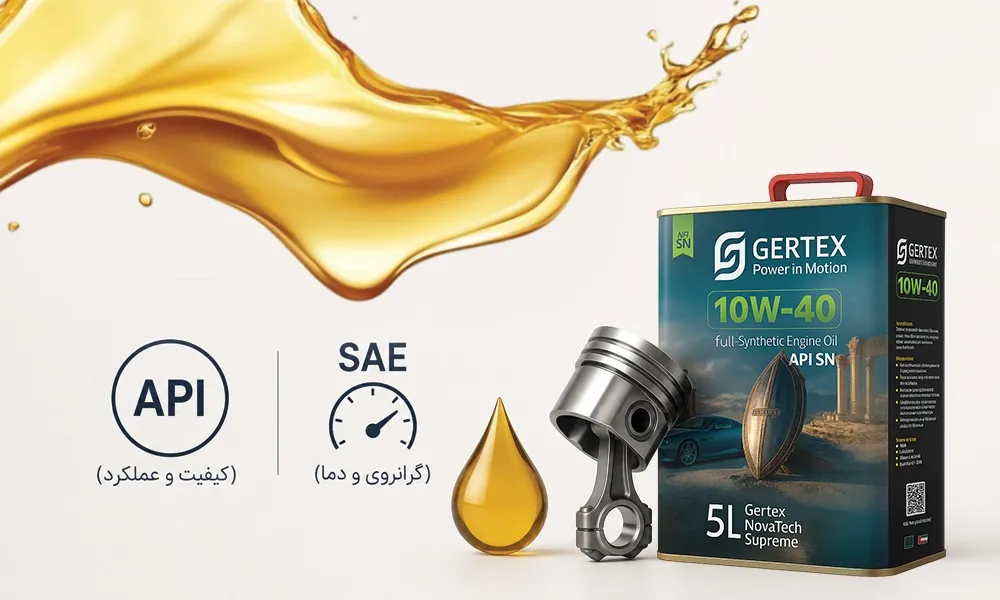
Choosing the right engine oil is not limited to brand, price, or a seller’s recommendation. Engine oil is one of the most vital consumable fluids in a vehicle. It directly helps reduce friction, control engine temperature, prevent deposits, protect against corrosion, extend component life, and maintain fuel efficiency. For this reason, two very important standards are often shown on engine oil packaging: API, which defines the oil’s quality and performance level, and SAE, which defines the viscosity grade, or how fluid or thick the oil behaves at different temperatures.
For the end user, terms such as API SP, API SN, SAE 10W-40, or SAE 5W-30 may look complicated at first. However, these codes explain what type of engine, climate, and vehicle technology an oil is suitable for. Pravia, as an automotive engine oil manufacturer, considers these standards in product formulation and presentation so that drivers, mechanics, and retailers can make clearer and more confident choices.
In this article, we explain in simple but accurate language what the API standard means, what SAE evaluates, how these two standards differ, and how to read these markings when choosing the right engine oil for a vehicle.
What Is the API Standard in Engine Oil?
API stands for American Petroleum Institute. It is one of the most recognized international organizations for standards related to petroleum, gas, fuels, and lubricants. In engine oil, API is used to define the oil’s quality and performance level. In simple terms, API indicates how well an oil can protect the engine against wear, oxidation, sludge, deposits, corrosion, and performance loss.
Contrary to what some users assume, API is not about oil thickness. When API SN or API SP appears on the packaging, it refers to performance quality and technology level, not how thick or thin the oil is. Oil viscosity is classified by the SAE standard, which we discuss later.
API classifications are usually shown with two letters. The first letter indicates the engine type, and the second letter shows the quality level or generation of the standard. For gasoline engines, API categories start with the letter S, referring to spark-ignition engines. For diesel engines, API categories start with the letter C, referring to compression-ignition engines.
For example, API SP is a newer quality level for gasoline engine oils, while API SN is older but still common for many vehicles. In diesel engine oils, classifications such as API CI-4, API CJ-4, or API CK-4 are used, each designed for a specific generation of diesel engines and operating conditions.
Why Is API Important for Engine Oil?
A vehicle engine works under high mechanical and thermal stress. Parts such as pistons, rings, crankshafts, bearings, camshafts, and valves are constantly moving. Without a suitable lubricating film between them, severe friction and wear can occur. Engine oil must not only lubricate but also suspend contaminants, transfer heat, prevent rust, and resist chemical breakdown.
The API standard uses a series of performance tests to determine how effectively an engine oil meets these requirements. Generally, newer API categories include stricter requirements for deposit control, detergency, wear protection, oxidation stability, and compatibility with modern engine technologies. This is why using an oil with the API level recommended by the vehicle manufacturer is one of the most important factors in extending engine life.
In modern vehicles, turbochargers, emission-control systems, higher operating temperatures, tighter tolerances, and the need for better fuel economy have made engine oil more technically demanding than before. Under these conditions, choosing oil only by price or old habits is not enough. The API level shown on the packaging should be checked and matched with the owner’s manual or expert technical advice.
API Categories for Gasoline Engines
For gasoline engines, API standards begin with the letter S. A second letter follows it to indicate the quality level and generation. In general, the later the second letter appears in the English alphabet, the newer the standard. For example, API SP is newer than API SN, and API SN is newer than API SM.
Older standards such as API SH, API SG, or API SJ are no longer recommended for many modern vehicles, except for older cars whose manuals specifically require those levels. By contrast, API SN and API SP are more relevant for many modern gasoline vehicles. API SP was developed to meet the needs of newer engines, including better protection against low-speed pre-ignition in some turbocharged gasoline engines, improved deposit control, and better timing-chain protection.
This does not mean every vehicle must always use the newest API category. The key point is compatibility between the oil’s quality level and the engine’s requirements. In many cases, newer standards can cover the needs of older ones, but the vehicle manufacturer’s recommendation should always be followed. Brands such as Pravia should present these details clearly so users understand which product is designed for which technical requirement.
API Categories for Diesel Engines
For diesel engines, API classifications begin with the letter C. Diesel engines operate under higher combustion pressure, produce more soot, often work under heavier loads, and may run for long periods in transportation fleets. Therefore, diesel engine oil must offer stronger soot control, viscosity stability, bearing protection, deposit control, and compatibility with emission-control systems.
Standards such as API CI-4, API CJ-4, and API CK-4 are widely known in this area. Each level is developed for a specific generation of diesel engines and specific environmental and technical requirements. For example, diesel engines equipped with aftertreatment systems may require oils with controlled levels of sulfated ash, phosphorus, and sulfur.
Choosing the right API level for diesel oil is especially important because using an unsuitable oil can lead to more deposits, shorter filter life, reduced oil pressure, higher fuel consumption, and even engine damage. In commercial vehicles, heavy equipment, and transport fleets, the right API oil can significantly reduce repair costs and vehicle downtime.
What Is the SAE Standard in Engine Oil?
SAE stands for Society of Automotive Engineers. In engine oil, SAE is used to classify viscosity, or the oil’s resistance to flow. In simple language, a low-viscosity oil flows more easily, while a higher-viscosity oil is thicker and flows more slowly.
When markings such as SAE 5W-30, SAE 10W-40, or SAE 20W-50 appear on an oil container, they describe how the oil behaves at low temperatures and at normal engine operating temperature. This is especially important during cold starts, different climates, and high-temperature operation.
Unlike API, SAE does not judge the oil’s quality, additive package, or protective ability. SAE only describes viscosity behavior under defined conditions. Therefore, two oils may both be SAE 10W-40, yet differ greatly in API quality level and formulation. This is why both SAE and API should be checked when selecting engine oil.
What Do the Numbers in SAE 10W-40 Mean?
To understand SAE, let us use a common example: SAE 10W-40. This code has two parts. The first part, 10W, refers to the oil’s low-temperature behavior. The W stands for Winter, not weight. The lower the number before W, the better the oil flows in cold conditions and the faster it reaches engine parts during cold starts.
The second number, 40, refers to the oil’s viscosity at engine operating temperature. The higher this number, the thicker the oil film remains at higher temperatures. For example, SAE 20W-50 is usually thicker at high temperature than SAE 10W-40, while SAE 5W-30 flows more easily at low temperature than SAE 10W-40.
In the past, single-grade oils such as SAE 30 or SAE 40 were more common. Today, most vehicles use multi-grade oils. A multi-grade oil is designed not to become excessively thick in cold weather and not to become too thin at operating temperature. This is achieved through suitable base oils and viscosity-index improver additives.
The Difference Between API and SAE
One common mistake when buying engine oil is confusing API and SAE. These two standards are completely different but complementary. API defines oil quality and performance, while SAE defines viscosity grade. In simple terms, API tells you how the oil protects and performs; SAE tells you how the oil flows and how thick it is.
For example, if an oil is labeled SAE 10W-40 and API SP, the SAE part explains its viscosity behavior across temperature ranges, while the API part explains its performance quality level for gasoline engines. If you look only at SAE, you may choose an oil with the right viscosity but unsuitable quality. If you look only at API, you may choose a high-quality oil with the wrong viscosity for your engine or climate.
The best choice is made when both indicators are considered together. A suitable engine oil should meet the API level required by the vehicle and the SAE viscosity grade recommended by the manufacturer. Pravia engine oil products should be selected by this same logic: appropriate quality level, suitable viscosity, and compatibility with engine type and operating conditions.
How to Choose the Right Engine Oil Standard
The first and most reliable source for choosing engine oil is the vehicle owner’s manual. The manufacturer usually specifies the proper SAE grade and the minimum acceptable API level. For example, a manual may recommend SAE 5W-30 with API SN or higher. In that case, choosing oil with the same viscosity and an equal or higher quality level is a logical decision.
The second factor is climate and driving conditions. In colder areas, oils with a lower number before W can provide better cold-start performance. In hot regions, high-mileage vehicles, older engines, or severe-duty conditions, a higher second number may be suitable if recommended technically. This decision should not be made by guesswork because modern engines have tight tolerances, and overly thick oil can restrict flow and increase fuel consumption.
The third factor is engine type. Gasoline, diesel, turbocharged, naturally aspirated, high-mileage, new, or emission-controlled engines each have different needs. An oil that works perfectly for one vehicle may not be suitable for another. The right choice should be based on API level, SAE grade, manufacturer recommendation, and real operating conditions.
Common Mistakes When Choosing Engine Oil
One common mistake is assuming that thicker oil is always better. In reality, thicker oil does not necessarily provide better protection. If viscosity is too high, the oil may reach sensitive components more slowly during cold starts, put more stress on the oil pump, and increase fuel consumption. On the other hand, oil that is too thin may fail to maintain enough film strength at high temperature if it is outside the manufacturer’s recommendation.
Another mistake is ignoring the API level. Some users only look at the SAE grade and assume any SAE 10W-40 oil is suitable. However, an SAE 10W-40 oil with an outdated API level may not provide the detergency, thermal stability, and wear protection required by modern engines. Using counterfeit oils or products with unclear standards can also increase the risk of serious engine damage.
A third mistake is delaying oil changes. Even the best engine oil has a limited service life. During operation, oil is exposed to heat, contaminants, unburned fuel, metal particles, and oxidation. Therefore, oil change intervals should be followed based on the manufacturer’s recommendation, oil type, and driving conditions. Heavy traffic, short trips, very hot weather, and dusty environments may require earlier oil changes.
Pravia’s Role in Confident Engine Oil Selection
In the engine oil market, brand trust and technical transparency are very important. Consumers should be able to clearly see essential information on the packaging, including SAE grade, API level, oil type, and recommended application. By focusing on automotive engine oil production, Pravia can turn this transparency into a brand advantage: products that are technically clear and easier for users to choose.
The right engine oil is not just a consumable product; it is part of an engine maintenance strategy. When the correct standard is selected, the engine runs more smoothly, unwanted noise is reduced, deposits are controlled, wear is minimized, and long-term repair costs are reduced. In this process, the role of a manufacturer such as Pravia is not only to supply a product, but also to provide accurate information, proper guidance, and support for informed selection.
Conclusion
API and SAE are two key criteria for understanding engine oil. API defines the oil’s quality and performance level and indicates the type of engine and technical requirement it is suitable for. SAE defines the oil’s viscosity grade and shows how it behaves at low temperature and normal engine operating temperature. Neither standard alone is enough for a complete choice; the right decision combines API, SAE, manufacturer recommendation, climate, and operating conditions.
When buying engine oil, do not see terms such as API SP, API SN, API CK-4, SAE 5W-30, SAE 10W-40, or SAE 20W-50 as meaningless codes. They are the common technical language of the lubricant industry for describing quality, performance, and engine compatibility. Once you understand this language, choosing engine oil becomes simpler, more accurate, and more reliable.
With attention to recognized standards and the needs of different vehicles, Pravia can be a trusted choice for drivers who want to protect their engines, reduce maintenance costs, and drive with greater confidence. Choosing standard engine oil is an investment in engine health, and understanding API and SAE is the first step toward that smart choice.